
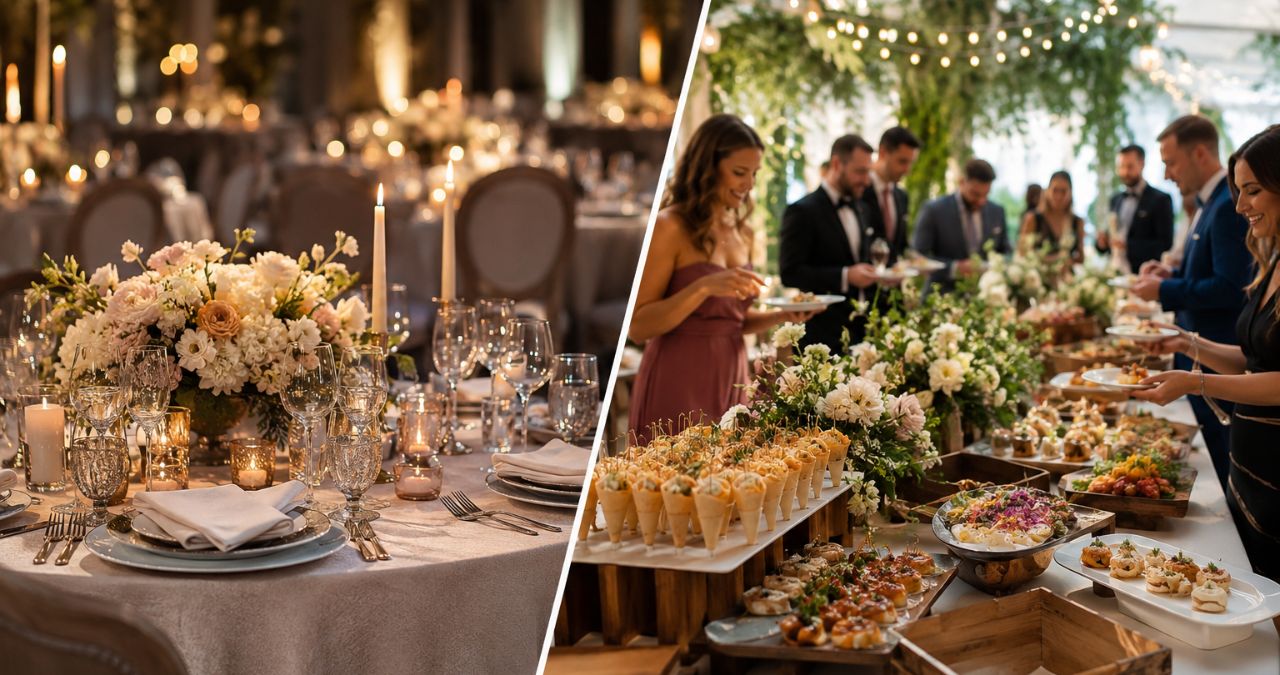
One of the biggest decisions couples face while planning their wedding reception is choosing the right dining experience. While traditional sit-down dinners have long been considered the standard for elegant wedding receptions, many modern couples are embracing heavy appetizers and interactive food stations as a creative and budget-friendly alternative.
The food you serve does more than satisfy your guests—it helps shape the atmosphere of your reception, influences your budget, and impacts the overall guest experience. So, which option is right for your wedding?
Let’s compare sit-down dinners and heavy appetizer or interactive food station receptions to help you determine the best fit for your celebration and budget.
The Traditional Sit-Down Dinner
A sit-down dinner is exactly what it sounds like: guests are assigned seats, and meals are served directly to their tables. Typically, guests choose their entrée in advance.
Pros of a Sit-Down Dinner:
- Formal and Elegant Atmosphere – A plated dinner instantly creates a sophisticated and traditional wedding vibe. If you’re planning a black-tie affair or a highly formal event, a sit-down dinner often complements that style perfectly.
- Organized Flow – Because guests remain seated while food is served, the reception tends to follow a structured timeline. This can make it easier to coordinate speeches, dances, and other scheduled events.
- Portion Control – With plated meals, catering teams can better control portions and food costs. Guests receive consistent meal presentations and serving sizes.
- Less Guest Decision-Making – Guests don’t have to navigate food lines or decide between multiple stations. Everything is brought directly to them, making the dining experience simple and convenient.
Cons of a Sit-Down Dinner:
- Higher Labor Costs – One of the biggest expenses associated with plated meals is staffing. Servers are needed to deliver meals, clear dishes, and coordinate service, which increases labor costs.
- Limited Menu Variety – Most weddings offer two or three entrée options. While this works well for many guests, it may not accommodate everyone’s tastes or dietary preferences.
- Less Social Interaction – Guests tend to remain at their assigned tables throughout dinner service. While this creates order, it can limit mingling and spontaneous interactions.
- More Formal Than Some Couples Want – Not every couple dreams of a highly structured reception. For those seeking a relaxed, modern celebration, a plated meal can sometimes feel too traditional.
Heavy Appetizers and Interactive Food Stations
Instead of serving a traditional plated meal, many couples now opt for substantial appetizers and multiple food stations placed throughout the reception venue. Examples include taco bars, pasta stations, carving stations, sliders, sushi displays, charcuterie tables, and dessert stations.
Pros of Heavy Apps and Food Stations:
- Increased Guest Interaction – Food stations naturally encourage guests to move around, mingle, and interact with one another. This creates a more energetic and social atmosphere compared to a seated dinner.
- Greater Menu Variety – Food stations allow couples to offer a wide range of cuisines and flavors. Guests can choose exactly what appeals to them and often sample multiple options. This flexibility is especially helpful when accommodating dietary restrictions such as vegetarian, vegan, gluten-free, or allergy-friendly selections.
- Often More Budget-Friendly – Depending on the menu and caterer, heavy appetizers and stations can cost less than a formal plated dinner. Reduced staffing requirements and more flexible food options can help couples stretch their budget.
- Creates a Unique Experience – Interactive stations become part of the entertainment. Guests often enjoy watching chefs prepare food, customizing their meals, or discovering different culinary options throughout the evening.
- Works Well for Modern Weddings – Many couples today prioritize experiences over tradition. Food stations align perfectly with contemporary wedding trends that emphasize personalization and guest engagement.
Cons of Heavy Apps and Food Stations:
- Potential Lines – If not properly planned, food stations can create bottlenecks or waiting lines. Adequate station placement and staffing are critical to keeping guests happy.
- Less Formal Feel – While many couples love the relaxed atmosphere, others may feel food stations don’t provide the level of formality expected at a traditional wedding.
- Guests May Not Realize It’s Dinner – Communication is important. If you’re serving heavy appetizers instead of a formal meal, make sure guests understand that substantial food will be available throughout the reception.
- Seating Still Matters – Even with a station-style reception, guests still need places to sit and enjoy their food. Some couples mistakenly assume fewer tables are needed, which can create comfort issues later.
Comparing Costs
When budget is a major factor, it’s important to look beyond the food itself.
Sit-Down Dinner Costs Typically Include:
- Higher staffing requirements
- Additional rental items
- Multiple courses
- Table-side service
- Increased setup and cleanup labor
Food Station Costs Typically Include:
- More flexible menu pricing
- Fewer servers (depending on setup)
- Potentially lower labor expenses
- Smaller portion flexibility
- Less waste from uneaten plated meals
However, food stations are not always cheaper. Premium stations such as seafood bars, carving stations, or made-to-order specialty dishes can quickly exceed the cost of a plated dinner.
The key factor isn’t necessarily the format, it’s the menu selections and service requirements.
Which Option Creates the Best Guest Experience?
The answer largely depends on your wedding style and guest demographics.
A sit-down dinner often appeals to:
- Older guests
- Formal wedding audiences
- Traditional family celebrations
- Luxury or black-tie weddings
Heavy appetizers and food stations often appeal to:
- Younger crowds
- Modern weddings
- Outdoor receptions
- Cocktail-style celebrations
- Couples who prioritize social interaction
Consider your guest list carefully. A room filled with energetic friends who love mingling may thrive with food stations. A guest list featuring many elderly relatives may appreciate the comfort and convenience of table service.
Hybrid Options Are Growing in Popularity
Many couples are discovering they don’t have to choose one format exclusively.
Popular hybrid approaches include:
- Cocktail hour with extensive appetizers followed by a plated entrée
- Interactive food stations combined with assigned seating
- Family-style dining with shared platters
- One signature station paired with traditional buffet service
- Late-night snack stations after dinner
These combinations offer the best of both worlds: structure when needed and flexibility where it matters.
Questions to Ask Before Deciding
Before selecting your reception dining style, ask yourself:
- What atmosphere do we want to create?
- How important is guest interaction?
- What is our overall catering budget?
- What are our guests likely to enjoy?
- Does our venue support food stations effectively?
- Are we prioritizing tradition or personalization?
Your answers will often point clearly toward one option over the other.
Final Thoughts
There is no universally “better” choice between a sit-down dinner and heavy appetizers with interactive food stations. The best option is the one that aligns with your vision, budget, and guest experience goals.
If you’re dreaming of a classic, elegant reception with a structured timeline, a traditional sit-down dinner may be worth the additional investment. If you want a lively, modern atmosphere where guests can mingle, explore different flavors, and enjoy a more relaxed celebration, heavy appetizers and interactive food stations can be an excellent – and often more flexible – alternative.
Ultimately, your wedding meal should reflect your personality as a couple. Whether guests are enjoying a beautifully plated entrée or building tacos at a customized station, they’ll remember the experience you create far more than the format you choose.
Andre’s Banquet & Catering | St. Louis, MO
At Andre’s Banquet & Catering, we have several amazing venues in addition to being a full-service catering company. Our packages typically include a full buffet meal, a 4-hour open bar, linen tablecloths, chair covers, centerpieces, personnel, as well as an on-site coordinator. We are a one-stop shop facility that can offer guidance in planning and organizing your big day. We have experience coordinating with several different vendors to make your banquet planning process painless!
Contact us today for any questions or reservations.