
Fall is one of the most popular seasons for weddings, and it is easy to see why. Cooler temperatures, colorful foliage, cozy décor, and seasonal flavors create a beautiful atmosphere for celebrating with family and friends. But while choosing your fall flowers and color palette may be exciting, there is another important decision you will need to make: How will you serve dinner to your guests?
When planning your wedding reception, three of the most common options are a buffet, plated dinner, or food stations. Each style has its own advantages, and the right choice depends on your guest list, venue, budget, wedding style, and the overall experience you want to create.
Here is what you should know about each option before making your decision.
Buffet: Relaxed and Full of Variety
A buffet is a classic wedding reception option that gives guests the opportunity to choose exactly what they want to eat. Instead of having a predetermined entrée served at the table, guests make their way to a buffet and select from several different dishes.
For a fall wedding, a buffet can be an especially appealing option because it gives you plenty of room to incorporate seasonal comfort foods. Imagine roasted chicken, herb-seasoned vegetables, mashed potatoes, seasonal salads, or a warm pasta dish. You can create a menu that feels hearty, welcoming, and perfectly suited to a crisp autumn evening.
One of the biggest advantages of a buffet is variety. Your guests may have very different tastes and dietary preferences and a buffet allows them to build a meal that works for them. It can also make it easier to offer vegetarian, gluten-free, or other alternative options.
A buffet also creates a more casual and social atmosphere. Guests can get up, mingle with one another, and return to their tables with their meals.
A buffet may be a great choice if you want:
- Plenty of menu variety
- A relaxed and welcoming atmosphere
- Seasonal comfort foods
- Guests to choose their own portions
- A flexible option for different dietary preferences
Plated Dinner: Elegant and Traditional
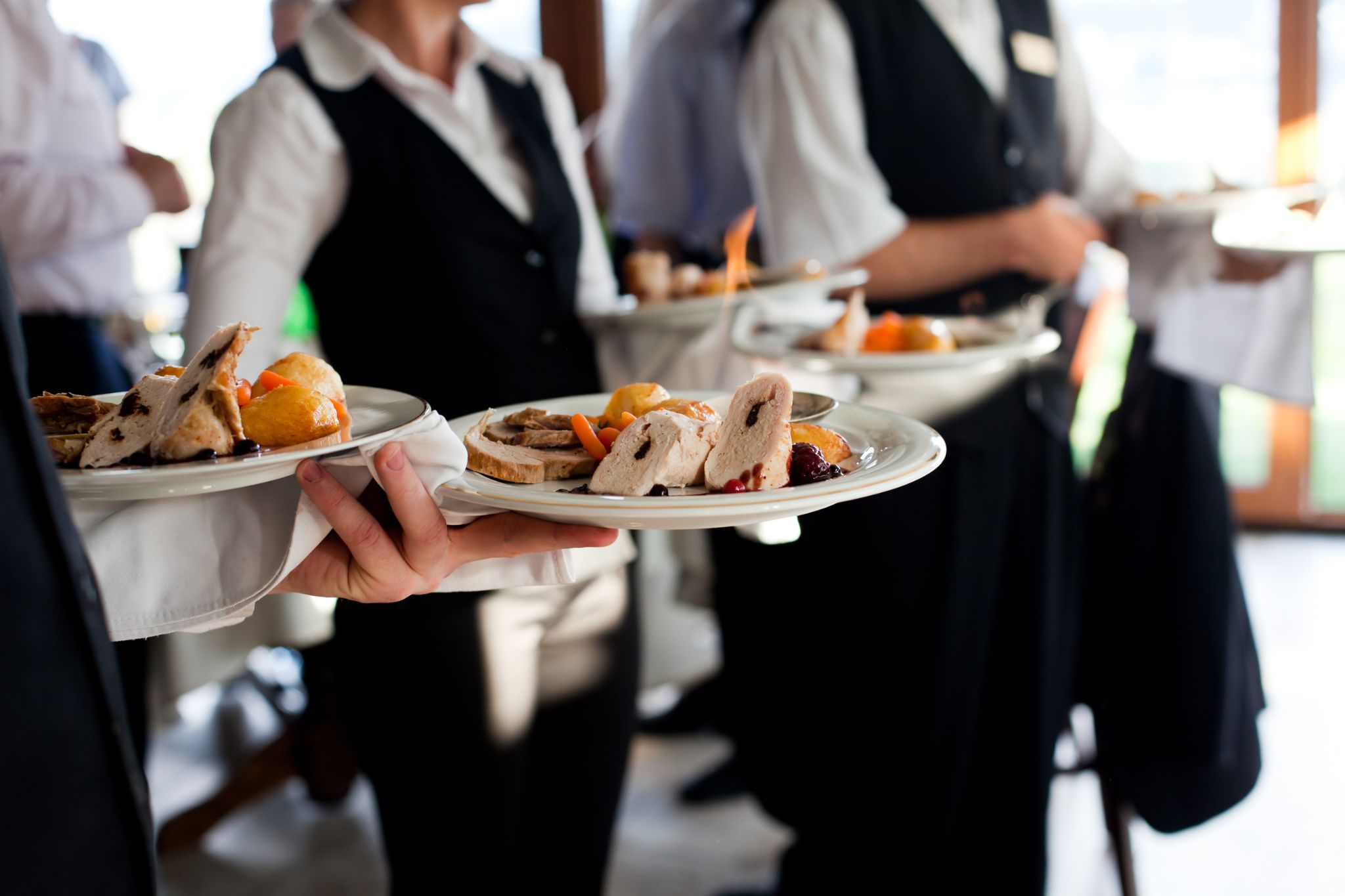
If you picture a classic formal wedding reception, you may imagine guests seated at beautifully decorated tables while servers bring dinner directly to them. That is the appeal of a plated dinner.
With this format, guests typically select their entrée in advance, either through their RSVP or during the planning process. They then receive their meal at their table during the reception.
For couples planning an elegant fall wedding, plated dinners can complement a more formal atmosphere beautifully. They allow guests to remain seated and enjoy conversation without having to get up and wait in line for food.
Plated dinners can also make the reception feel more structured. Dinner service can be coordinated with speeches, toasts, music, and other events throughout the evening.
Another advantage is presentation. Caterers can carefully plate each meal, creating a polished look that works especially well with formal wedding décor.
The trade-off is that plated dinners generally require more coordination. You’ll need accurate entrée selections, careful meal counts, and a catering team capable of serving a large number of guests efficiently. Depending on the menu and caterer, plated service may also be more expensive than some buffet or station options.
For couples with guests who have allergies or dietary restrictions, it is important to communicate those needs clearly with your caterer well in advance.
A plated dinner may be a great choice if you want:
- A formal and elegant reception
- Guests to remain seated during dinner
- Consistent meal portions
- Beautifully presented dishes
- A structured dinner service
Food Stations: Interactive and Flexible
Food stations offer a middle ground between a traditional buffet and a more formal plated meal. Instead of having one large buffet, you can set up several different stations throughout the reception space, each featuring a specific type of food.
For a fall wedding, the possibilities are almost endless.
You could have a carving station featuring roasted turkey or beef, a pasta station with seasonal sauces and toppings, a mashed potato bar with different toppings, or a soup station featuring warm autumn flavors. You might even create a dessert station with pies, donuts, cookies, and other seasonal treats.
One of the biggest benefits of stations is the interactive experience they create. Guests can move around the reception, sample different foods, and choose what appeals to them.
Stations can also help prevent the long lines that sometimes occur at a traditional buffet because guests are spread throughout the room rather than directed toward one central location.
They can be particularly fun for couples who want their wedding reception to feel less traditional. Stations can reflect your personalities, favorite foods, cultural backgrounds, or even the location of your wedding.
The main consideration is space. Your venue needs to have enough room for multiple food displays, guest traffic, and catering staff. You’ll also want to think about how many stations you’ll need to comfortably accommodate your guest count.
Food stations may be a great choice if you want:
- An interactive dining experience
- Multiple types of cuisine
- A less traditional reception
- Plenty of customization
- Guests to mingle while selecting food
Consider Your Fall Wedding Style
When choosing between a buffet, plated dinner, and stations, start by thinking about the overall style of your wedding.
A formal ballroom wedding with elegant table settings may naturally lend itself to a plated dinner. A rustic barn wedding might work beautifully with a buffet filled with seasonal comfort foods. A modern outdoor wedding could be the perfect setting for creative food stations.
That doesn’t mean you have to follow a particular formula. Your wedding should reflect your preferences. A formal wedding can absolutely have a buffet, and a casual wedding can feature plated meals.
Think about the experience you want your guests to have rather than simply choosing the option that is most traditional.
Think About Your Guest List
Your guest list should also influence your decision.
If you have a large number of guests, consider how efficiently each option can be served. Buffets and stations can create lines, while plated dinners require a coordinated service team.
You should also consider your guests’ ages and dietary needs. If you have a wide range of dietary preferences, a buffet or stations may provide greater flexibility. If you have a smaller guest list and want an intimate, sophisticated dinner experience, plated service may be a natural fit.
Don’t Forget About the Season
Fall gives you an opportunity to have fun with your wedding menu. Regardless of which serving style you choose, consider incorporating seasonal ingredients and flavors.
Think roasted root vegetables, apples, pears, pumpkin, squash, cranberries, herbs, warm breads, hearty salads, and comforting desserts. Even a traditional plated dinner can feel distinctly autumnal when the menu reflects the season.
You can also coordinate your food with your drinks. Seasonal mocktails, signature cocktails, cider, hot chocolate, or coffee stations can make your reception feel even more inviting as the weather cools down.
Talk With Your Caterer
Before making your final decision, have a detailed conversation with your caterer. Ask about the logistics, staffing requirements, menu options, serving times, and pricing associated with each format.
Your caterer can also help you determine which option makes the most sense for your venue and guest count.
Don’t be afraid to ask questions. Find out how long dinner service is expected to take, how dietary restrictions will be handled, whether servers or attendants are included, and what setup each option requires.
Understanding these details early can help you avoid surprises later in the planning process.
So, Which One Should You Choose?
There isn’t one universally perfect way to serve dinner at a fall wedding. Buffets, plated dinners, and food stations can all create a memorable dining experience when they are thoughtfully planned.
A buffet offers variety and flexibility. A plated dinner provides a polished, traditional experience. Food stations create an interactive atmosphere and allow guests to explore different dishes.
The best choice ultimately comes down to your wedding style, guest list, venue, budget, and the experience you want to create.
Most importantly, don’t forget that dinner is more than simply feeding your guests. It is part of the celebration. It gives everyone a chance to sit down, connect, laugh, share stories, and enjoy the evening together.
Whether your dream fall wedding includes a beautifully plated entrée, a table filled with seasonal favorites, or stations overflowing with autumn-inspired dishes, choose a format that feels authentic to you as a couple. With the right menu and thoughtful planning, your wedding dinner can become one of the most memorable parts of your celebration.
Andre’s Banquet & Catering | St. Louis, MO
At Andre’s Banquet & Catering, we have several amazing venues in addition to being a full-service catering company. Our packages typically include a full buffet meal, a 4-hour open bar, linen tablecloths, chair covers, centerpieces, personnel, as well as an on-site coordinator. We are a one-stop shop facility that can offer guidance in planning and organizing your big day. We have experience coordinating with several different vendors to make your banquet planning process painless!
Contact us today for any questions or reservations.